
















Skip to Content Skip to Footer
WIC Oregon logo
WIC Oregon logo
  • Home
  • Women
  • Infants
  • Children
  • Fathers
  • English (English)
    • Spanish (Español)
    • Russian (Русский)
    • Ukrainian (українська)
    • Vietnamese (Tiếng Việt)
    • Chinese (中國人)
    • Arabic (العربية)
    • Somali (Soomaali)
    • Dari (از)

Caring for your babyBirth to 6 Months

  • Home
  • Infants
  • Birth to 6 Months
  • Hello World
  • You Have What I Need To Grow
  • I Need Your Touch
  • Using a Bottle to Feed Your Baby
  • I Need to Eat Often
  • Look for Baby’s Signs
  • Growth Spurts
  • Play with Me!
  • Look What I Can Do!
  • Keep Baby Safe and Healthy
  • Introducing Peanut Butter

Hello World

I am your baby. You are my everything.

Please help me grow strong in body, heart, and mind. I grow best when you:

  • Hold me skin-to-skin or cuddle me. I feel safe in your arms.
  • Smile and talk to me. I learn so much from you.
  • Listen to me when I talk to you. I use my body movements and noises to tell you when I am hungry, full, uncomfortable, or just tired.

Breast milk or baby formula with iron is all I need to grow and develop for my first 6 months.

Breastfeeding

You Have What I Need To Grow​.​

Breast milk is the perfect food for me.

  • It has all the nutrients I need to help me stay healthy and not get sick.
  • Your breast milk changes as I grow. The longer we breastfeed, the better.
Ask your health care provider if I need extra Vitamin D to grow if we are breastfeeding. Ask about an iron supplement when I’m about 6 months old.
Red and pink abstract circular design on black background.

Formula Feeding

If I drink formula, it’s important to mix the ingredients the right way. Follow the mixing directions on the can.

Always add water to the bottle first, then the powder formula.

Always use the scoop provided in the can of formula. Make sure it is level.

Use prepared infant formula within 2 hours after taking it out of the refrigerator.

Once I start feeding, throw away any formula left in the bottle after 1 hour.
BottleFeeding

I Need Your Touch

Hold me when you feed me.
I feel safe with you and love to look at your face.

Sometimes I may take a break from eating, even though I’m not full yet. I just want to rest or share some special time with you.

Help me stay awake while you feed me. Please don’t prop up my bottle. I could choke or get an ear infection.

Using a Bottle to Feed Your Baby

Whether it’s breast milk or formula in my bottle:
milk bottle
Start by offering only a small amount at a time, 2 to 3 ounces of breast milk or formula.
stop watch
Let me be in control of how fast I drink from the bottle.
battery
Trust me to know when I am full. Please don’t make me finish a bottle.
clock
Keep prepared bottles cold until you are ready to feed me. Use bottles you prepare within 24 hours.
no use microwave
Always warm up my bottles in hot water. Never microwave breastmilk or formula. “Hot spots” can burn my mouth. Ouch!

I Need to Eat Often

My stomach is small.

Breastfeeding
Birth to 3 Months
  • My tummy can hold about 2 to 3 ounces at a time.
  • I will want to eat 8 to 12 times in 24 hours.
  • Feed me every 1½ to 3 hours.
bac_black_mom_breastfeeding
4 to 6 Months
  • My tummy can hold about 4 to 6 ounces at a time.
  • I will want to eat 6 to 8 times in 24 hours.

Remember, all babies are different. I may eat different amounts from one day to the next. As I become older and my stomach grows, I may eat less often, but can eat more at each feeding.

Look for My Signs

I use body movements and make noises to let you know what I need. If you look for these signs, you can respond to me before I start to cry. I am much easier to feed when I am calm.

“I’M HUNGRY”
When I’m starting to get hungry, I might:
  • Bring hands to or near my mouth
  • Move arms and legs
  • Make sucking noises
  • Move mouth or tongue
  • Turn head or search for the nipple (root)
“I’M FULL”
When I’m feeling full, I might:
  • Suck slower or stop sucking
  • Relax hands and arms
  • Turn away from the nipple
  • Push away
  • Fall asleep
  • Frown, fuss, or kick if you keep feeding me

Growth Spurts

As I grow, my routine might change, and I may want to eat and sleep more than usual. These are called growth spurts.

All babies are different, but my growth spurts might happen when I’m around the ages of:

newborn_back_sleeping

2 to 3 weeks

2-3 week
4 to 6 weeks
3 month
3 months
4 month
4 months
6 month
6 months
9-month
9 months

Your body also knows what I need and will make more milk to keep up with my growth spurts. The more often you breastfeed or pump, the more milk you will make.

If I act hungry after I finish a feeding, offer me the breast again. If I am taking a bottle, offer me another ounce or two.

Play with me!

I’m ready to learn about you, me, and the world we live in. I want to discover what my body can do.
Give me tummy time when we play.
When I'm alert and relaxed, put me on a blanket on the floor. Watch how I stretch and kick my legs and move my arms. I'm making them stronger.

PLAYING helps me learn, improve coordination, build strength, explore, and bond with you!

Look what I can do!

I learn best when I feel happy, loved, and safe.​

Baby_sleeping_on_Dad
Birth to 3 Months
The world is new to me. It can be scary. I may cry a lot at first.
  • Crying is my way to say I need you.
  • When we are skin-to-skin, I calm down. I learn that you care.
  • Holding me will not spoil me.
I must learn what day and night are.
  • At first, I sleep, wake up and eat, and go back to sleep often. This is normal and helps me grow.
  • After I am 3 months old, I may sleep for longer periods of time.
  • Please be patient as I learn.
I know your voice.
  • I like to hear you talk.
MomReadingToBaby
4 to 6 Months
I start to settle into a routine.
  • I can sleep longer at night.
I’m growing strong and active.
  • I can hold my head up.
  • I know my name when you say it.
  • I babble ba-ba-ba!
  • I can laugh.
  • Let’s play peek-a-boo and pat-a-cake.
Please read to me.
  • Show me the pictures and tell me what they are.

Keep me safe and healthy

Birth-3-Months

ALWAYS put me to sleep alone on my back, and in my crib or pack-n-play. We can share a room, but not the same bed. I could suffocate if a blanket, pillow, or toy covers my mouth or nose.

Wash Hands

Wash your hands before making my food and feeding me.

CleaninBabysTongue

Clean my gums and teeth with a clean, wet, soft cloth or a soft rubber or silicone finger brush after I eat. Begin using a soft toothbrush with fluoride toothpaste as soon as my first teeth appear.

6-months-age

Wait until I’m about 6 months of age before offering solid foods. I need time to develop my immune system and strengthen the muscles in my mouth to eat and swallow foods properly. If I’m given solid foods before I’m ready, I could choke or get sick.

DO NOT give me these foods until I am at least 1 year old:

Cow's Milk

Cow’s milk or other non-dairy milks (like soy or almond milk). It’s too hard for me to digest and may cause health problems.
Honey don't use

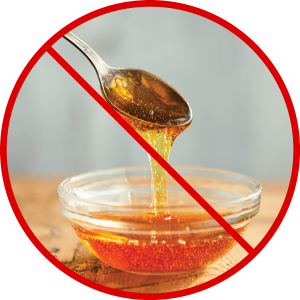
Honey and foods made with honey. Honey can contain bacteria that cause infant botulism, or food poisoning. These bacteria are harmless to older kids and adults.
Introducing Peanut Butter

If my healthcare provider says it is ok, let me try peanut butter around 6 months of age. Doing this might help prevent a peanut allergy as I grow older.
  • In the morning, mix one teaspoon of peanut butter with breast milk or formula. Make it thin and easy to swallow.
  • Use a spoon to offer a taste of the thinned product. Wait 10 minutes, then offer more. Watch for any reaction for the next 2 hours.

For additional support, contact your local WIC Breastfeeding Peer Counselor or WIC Designated Breastfeeding Expert for breastfeeding questions.

WIC Oregon logo

Contact Us

800 NE Oregon St, Suite 865
Portland, OR 97232
971-673-0040
www.healthoregon.org/wic

Learn More

  • How to Apply
  • Find a Clinic
  • Where can I shop?

Resources

  • Oregon Health Plan
  • WIC Breastfeeding Support
  • Oregon Division of Tobacco Prevention
  • Oregon 211
  • Food Hero – Recipes
  • facebook
  • Youtube

USDA is an equal opportunity provider, employer, and lender.

Cookie PolicyPrivacy Policy

© Brush Art Corporation

Share

  • Email
  • SMS
If you are using multiple emails, separate them with commas.

    Side-Lying

    Side-Lying Hold

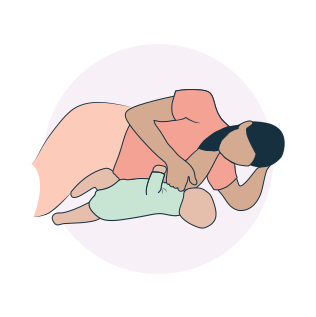
    1. For the right breast, lie on your right side with your baby facing you.
    2. Pull your baby close. Your baby’s mouth should be level with your nipple.
    3. In this position, you can cradle your baby’s back with your left arm and support yourself with your right arm and/or pillows.
    4. Keep loose clothing and bedding away from your baby.
    5. Reverse for the left breast.

    This hold is useful when:

    • You had a C-section
    • You want to rest while baby feeds
    • You are breastfeeding in the middle of the night
    • You and your baby are comfortable in this position
    cross-cradle

    Cross-Cradle Hold

    1. For the right breast, use your left arm to hold your baby’s head at your right breast and baby’s body toward your left side. A pillow across your lap can help support your left arm.
    2. Gently place your left hand behind your baby’s ears and neck, with your thumb and index finger behind each ear and your palm between baby’s shoulder blades. Turn your baby’s body toward yours so your tummies are touching.
    3. Hold your breast as if you are squeezing a sandwich. To protect your back, avoid leaning down to your baby. Instead, bring your baby to you.
    4. As your baby’s mouth opens, push gently with your left palm on baby’s head to help them latch on. Make sure you keep your fingers out of the way.
    5. Reverse for the left breast.

    This hold is useful when:

    • Your baby is premature
    • Your baby has a weak suck
    • Your baby needs help to stay latched
    • Your baby needs extra head support
    • You and your baby are comfortable in this position
    Football

    Clutch or “Football” Hold

    1. For the right breast, hold your baby level, facing up, at your right side.
    2. Put your baby’s head near your right nipple and support their back and legs under your right arm.
    3. Hold the base of your baby’s head with your right palm. A pillow underneath your right arm can help support your baby’s weight.
    4. To protect your back, avoid leaning down to your baby. Bring baby to you instead.
    5. Reverse for the left breast.

    This hold is useful when:

    • You had a C-section
    • You have large breasts
    • You have flat or inverted nipples
    • You have a strong milk let-down
    • You are breastfeeding twins
    • Your baby likes to feed in an upright position
    • Your baby has reflux
    • You and your baby are comfortable in this position
    CRADLE hold

    Cradle Hold

    1. For the right breast, cradle your baby with your right arm. Your baby will be on their left side across your lap, facing you at nipple level.
    2. Your baby’s head will rest on your right forearm with your baby’s back along your inner arm and palm.
    3. Turn your baby’s tummy toward your tummy. Your left hand is free to support your breast, if needed. Pillows can help support your arm and elbow.
    4. To protect your back, avoid leaning down to your baby. Instead, bring your baby to you.
    5. Reverse for the left breast.

    This hold is useful when:

    • Your baby needs help latching on
    • You and your baby are comfortable in this position
    laid-back

    Laid-Back Hold

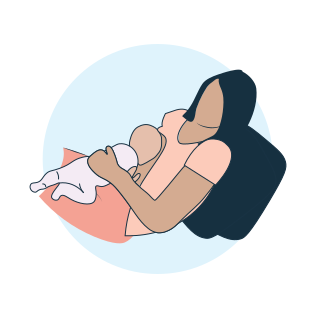
    1. Lean back on a pillow with your baby’s tummy touching yours and their head at breast level. Some moms find that sitting up nearly straight works well. Others prefer to lean back and lie almost flat.
    2. You can place your baby’s cheek near your breast, or you may want to use one hand to hold your breast near your baby. It’s up to you and what you think feels best.
    3. Your baby will naturally find your nipple, latch, and begin to suckle.

    This hold is useful when:

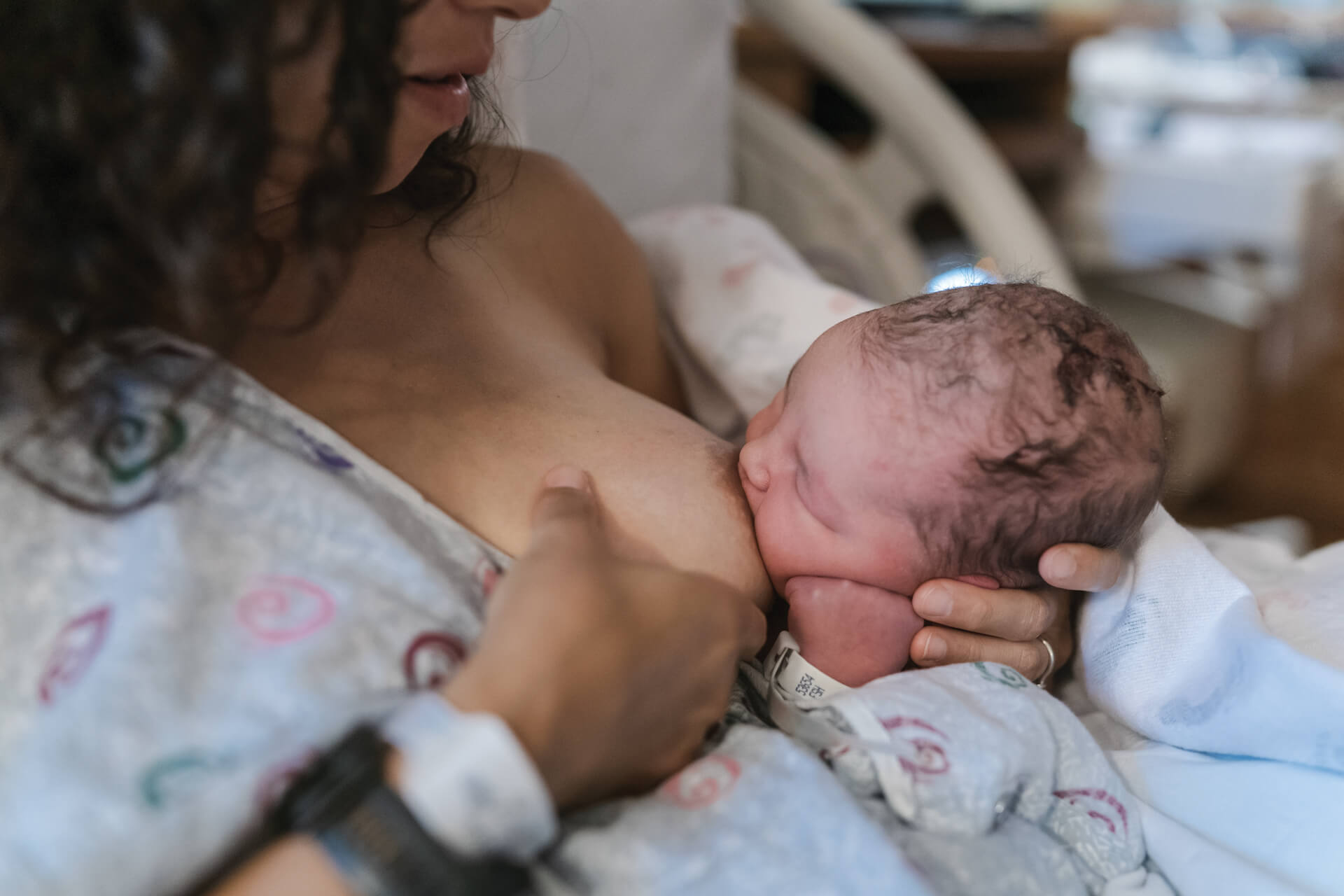
    • Your baby is placed on your chest right after birth
    • You have a strong milk let-down
    • You have large breasts
    • You and your baby are comfortable in this position