
DEAR DAD,
An involved dad is important to a baby’s first months and years of life.
Even when the dad lives outside the home, babies with actively involved fathers grow into healthier, happier, more successful children and adults. Babies need to form a strong bond with their parents, and that means dad, too.
Bringing home a new baby is a big change for everyone. There are many ways dads can help support mom and baby once they arrive home from the hospital.
Mom’s body goes through a lot of changes during the pregnancy. It may take a little while for her to feel like herself. Be gracious, patient, and supportive.

LIMIT VISITORS
Keep people who are sick away from your baby.

DAILY CHORES
Help with cooking, cleaning, and laundry.

CHECK UP ON MOM
If she is feeling depressed or anxious, encourage and support her to seek help.

Depression affects up to 25% of dads during their partner’s pregnancy or in the first year after baby is born.
If you or your baby’s mom have anxiety, are feeling depressed, or have thoughts of harming yourself or your baby, get help right away. Talk with your healthcare provider. Untreated depression is hard on your baby, your family, and you.
Call 1-800-273-8255 for free and confidential emotional support 24 hours a day, 7 days a week.
Spend quality time with your older kids by having them help with getting a diaper, smiling at, or reading to baby.
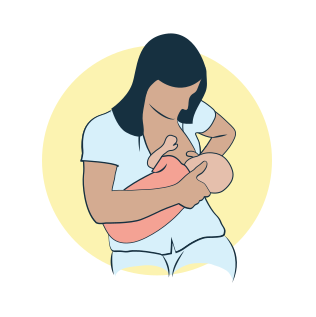
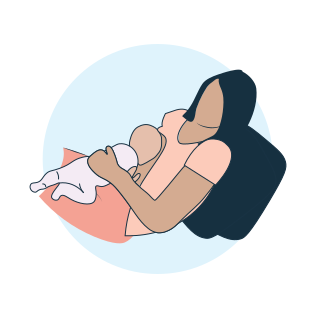
Breastfeeding Support
Breastfeeding is the best way to provide nourishment to your new baby. It might not be easy at first so give mom plenty of encouragement and support.
- Newborns breastfeed throughout the day and night about 8 to 12 times in 24 hours. They are not on a schedule and love to feed often.
- Most babies lose weight in the first week of life, this is normal. If your baby is feeding often, they will regain their birth weight by 14 days.
- Provide mom with water and healthy foods. Keeps snacks like a peanut butter sandwich, granola bars, and nuts close to mom.
- If mom is pumping breast milk, help out by washing and sanitizing pump parts and bottles.
WIC is here to support you. Call for any questions or for additional breastfeeding support.
Why Breastfeed?
3 out of 4 babies born in Oregon are breastfed.

Breastfed babies get sick less often.

Lower cost!

It’s convenient (no bottles, no mess, and always on hand).

Breastfeeding moms are healthier.
Spit Up – Burping – Dirty Diapers
Having breast milk or formula in your baby’s tummy is new to them. Babies spit up less and require less burping as they get older.
SPIT UP
- Spit up can be common in babies.
- Babies spit up less if they are calm when they eat.
- Babies spit up less when they stop eating when they are full. Follow your baby’s hunger cues to help reduce spit up.
- Follow each feeding with 30 minutes in an upright position.
Speak to your WIC Nutritionist or healthcare provider if you are concerned with the amount your baby is spitting up at each feeding.
BURPING
- Babies swallow air when they eat. If they swallow too much air, they may need to be burped.
- Wait until they stop eating to burp them.
- Hold them with their tummy against your chest or lap and gently pat or rub their back.
DIRTY DIAPERS
Be a hero, change diapers!
For breastfed babies:
- Your breastfed baby’s dirty diapers change from greenish-black to pale yellow, soft, and seedy looking over the first week. In the early days to the first month, diapers may look like this chart.
For formula and breastfed babies over a month:
- Babies might grunt and turn red in the face when they poop.
- Some babies might poop one or two times a day.
- Sometimes they won’t poop for one or two days. This is normal.
If you have concerns about your baby’s dirty diapers, call your healthcare provider or local WIC office.
| Baby’s Age | Wet | Poops |
|---|---|---|
| Day 1 |
|
|
| Day 2 |
|
|
| Day 3 |
|
|
| *Day 4+ |
|
|
*This amount lasts up to the first month or longer.
Poop color will change over the first month.

| Baby’s Age | Wet | Poops |
|---|---|---|
| Day 1 |
|
|
| Day 2 |
|
|
| Day 3 |
|
|
| *Day 4+ |
|
|
*This amount lasts up to the first month or longer.
Poop color will change over the first month.
Baby’s Time with Dad
Tummy time!
Laying on their tummy helps strengthen your baby’s neck and shoulder muscles. Think of it as their daily workout as they prepare for big moves like rolling over, sitting, and crawling.
- Get down on the floor with your baby for a couple of minutes each day.
- Reward them with smiles and goofy faces when they lift their heads.
Play peekaboo.
Talk to your baby and make funny faces while changing their diaper.
Go for walks.
Keeping active—getting out of the house is good for everyone!
Spend time reading and talking to your baby.
Their brain is learning new words every day, even from the day they are born.
Keeping Your Baby Safe
Vaccinations
It’s important to take your baby to all medical appointments and keep up-to-date on all shots. Visit https://www.cdc.gov/vaccines/ for information on when your baby is due for shots.
Water Safety
Always stay with your child when they are in the bathtub or near water.
Protect Baby's Teeth
Clean your baby’s gums with a clean, damp cloth or a soft rubber or silicone finger brush after they eat. Begin using a soft toothbrush with fluoride toothpaste as soon as their first teeth appear.
CAR SEATS
- Buckle them into a child safety seat before they ride in a car.
- Know how to install the seat and strap your baby in right.
- Remove your infant from their car seat once you arrive at your destination, especially if they are asleep.
- The settings, position, and type of car seat will change as your baby grows.
SLEEPING SAFELY
Always put your baby to sleep on their back on a firm mattress with no blankets or pillows.
The American Academy of Pediatrics recommends that babies sleep in the same room as their parents on a separate sleep surface until their first birthday.
Your child is depending on you to be healthy and stay healthy.
- Do not use drugs, alcohol, or smoke in your home or around your child.
- If you smoke outside, remove your outer layer of clothing or change clothing before holding your baby.
- For support with quitting, including free coaching, a free quit plan, free educational materials, and referrals to local resources, call 1-800-QUIT-NOW (1-800-784-8669)
Fatherhood Resources
National
National Fatherhood Initiative
National Responsible Fatherhood Clearinghouse
Check for fatherhood initiative programs at your local Head Start program or school system.