Skip to Content Skip to Footer
WIC Oregon logo
WIC Oregon logo
  • Guriga
  • Dumarka
  • Dhallaanka
  • Carruurta
  • Aabeyaasha
  • Somali (Soomaali)
    • English (English)
    • Spanish (Español)
    • Russian (Русский)
    • Ukrainian (українська)
    • Vietnamese (Tiếng Việt)
    • Chinese (中國人)
    • Arabic (العربية)
    • Dari (از)

Bayaanka Takoorka

  • Guriga
  • Nondiscrimination Statement

Bayaanka Takoorka

Iyadoo la raacayo sharciga xuquuqaha madaniga ee Federaalka iyo xeerarka iyo siyaasadaha xuquuqaha madaniga ee Waaxda Beeraha ee Mareykanka (U.S. Department of Agriculture, USDA), Hay’adeeda, xafiisyadiisa, iyo shaqaalihiisa, iyo sidoo kale hay’adaha ka qayb qaata ama maamula barnaamijyada USDA, waxaa ka mamnuuc inay sameeyaan takoor ku saleysan jinsiyada, midabka, asalka qaran, diinta, jinsiga, xaaladda naafonimo, da’da, xaalada guurka, xaalad qoys/waalidnimo, dakhli ka yimaada barnaamij gargaar dadweyne, aragtiyo siyaasadeed, ama aargoosi ama falcelin ciqaabeed la xiriirta hawlo xuquuq madani oo hore, barnaamij kasta ama hawl kasta oo ay USDA fuliso ama maalgeliso (dhammaan qodobadani ma khuseeyaan guud ahaan barnaamijyada). Hababka xalinta cabashada iyo wakhtiyada kama dambaysta ah ee gudbinta cabashada way kala duwanaan karaan iyadoo ku xiran barnaamijka ama dhacdada.

Dadka naafada ah ee u baahan habab kale oo isgaarsiin si ay u helaan macluumaadka barnaamijka (tusaale ahaan Xog Far waawayn ku qoran, qoraalka farta waaweyn, cajalad maqal, Luuqadda Calaamadaha Mareykanka, iwm) waa inay la xiriiraan Hay’adda Gobolka ama Deegaanka ee maamusha barnaamijka ama ay kala xiriiraan USDA adeegga Isgaarsiinta Gudbinta iyagoo wacaya 711 (cod iyo TTY). Intaa waxaa dheer, macluumaadka barnaamijka waxaa lagu heli karaa luuqado kale oo aan ahayn luuqadda Ingiriisiga.

Si aad u gudbiso cabasho takoor oo la xiriirta barnaamij, buuxi Foomka Cabashada Takoorka Barnaamijka ee USDA, AD-3027, oo laga heli karo oonleenka ee Sida Loo Gudbiyo Cabasho Takoor oo la Xiriirta Barnaamij iyo xafiis kasta oo USDA ah, ama qor warqad ku socota USDA kuna dar warqadda dhammaan macluumaadka lagu codsaday foomka. Si aad u codsato nuqul ka mid ah foomka cabashada, wac (866) 632-9992. U dir foomka aad buuxisay ama warqaddaada USDA adigoo adeegsanaya: (1) boostada: Depatman Agrikilti Etazini, Biwo Sekretè Adjwen pou Dwa Sivil, 1400 Independence Avenue, SW, Mail Stop 9410, Washington, D.C. 20250-9410; (2) fakiska: (202) 690-7442; ama (3) iimaylka: program.intake@usda.gov.

  • boostada: U.S. Department of Agriculture,
    Office of the Assistant Secretary for Civil Rights,
    1400 Independence Avenue, SW, Mail Stop 9410,
    Washington, D.C. 20250-9410
  • fakiska: (202) 690-7442
  • iimaylka: program.intake@usda.gov

USDA waxay bixisaa fursad, shaqaaleeysiin, iyo deyn loo siman yahay.
WIC Oregon logo

Nagala soo xiriir

800 NE Oregon St, Suite 865
Portland, OR 97232
971-673-0040
www.healthoregon.org/wic

Wax badan ka Ogow

  • Sida loo codsado
  • Hel Goob caafimaad
  • Halkee ayaan ka adeegan karaa?

Adeegyada

  • Qorshaha Caafimaadka Oregon
  • Taageerada WIC ee Naasnuujinta
  • Waaxda Kahortagga Tubaakada ee Oregon
  • Oregon 211
  • Food Hero – Cuntooyinka
  • facebook
  • Youtube

USDA waxay bixisaa fursad, shaqaaleeysiin, iyo deyn loo siman yahay.
Cookie PolicySiyaasadaha Dhowrsanaanta xogta

© Brush Art Corporation

Share

  • Email
  • SMS
If you are using multiple emails, separate them with commas.

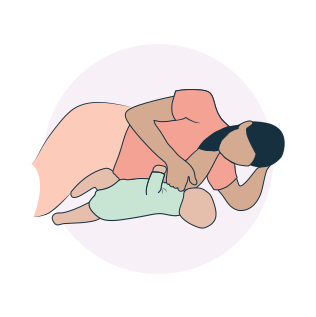
    Side-Lying

    Side-Lying Hold

    1. For the right breast, lie on your right side with your baby facing you.
    2. Pull your baby close. Your baby’s mouth should be level with your nipple.
    3. In this position, you can cradle your baby’s back with your left arm and support yourself with your right arm and/or pillows.
    4. Keep loose clothing and bedding away from your baby.
    5. Reverse for the left breast.

    This hold is useful when:

    • You had a C-section
    • You want to rest while baby feeds
    • You are breastfeeding in the middle of the night
    • You and your baby are comfortable in this position
    cross-cradle

    Cross-Cradle Hold

    1. For the right breast, use your left arm to hold your baby’s head at your right breast and baby’s body toward your left side. A pillow across your lap can help support your left arm.
    2. Gently place your left hand behind your baby’s ears and neck, with your thumb and index finger behind each ear and your palm between baby’s shoulder blades. Turn your baby’s body toward yours so your tummies are touching.
    3. Hold your breast as if you are squeezing a sandwich. To protect your back, avoid leaning down to your baby. Instead, bring your baby to you.
    4. As your baby’s mouth opens, push gently with your left palm on baby’s head to help them latch on. Make sure you keep your fingers out of the way.
    5. Reverse for the left breast.

    This hold is useful when:

    • Your baby is premature
    • Your baby has a weak suck
    • Your baby needs help to stay latched
    • Your baby needs extra head support
    • You and your baby are comfortable in this position
    Football

    Clutch or “Football” Hold

    1. For the right breast, hold your baby level, facing up, at your right side.
    2. Put your baby’s head near your right nipple and support their back and legs under your right arm.
    3. Hold the base of your baby’s head with your right palm. A pillow underneath your right arm can help support your baby’s weight.
    4. To protect your back, avoid leaning down to your baby. Bring baby to you instead.
    5. Reverse for the left breast.

    This hold is useful when:

    • You had a C-section
    • You have large breasts
    • You have flat or inverted nipples
    • You have a strong milk let-down
    • You are breastfeeding twins
    • Your baby likes to feed in an upright position
    • Your baby has reflux
    • You and your baby are comfortable in this position
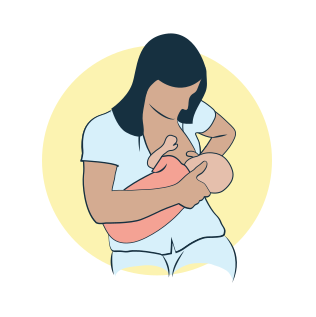
    CRADLE hold

    Cradle Hold

    1. For the right breast, cradle your baby with your right arm. Your baby will be on their left side across your lap, facing you at nipple level.
    2. Your baby’s head will rest on your right forearm with your baby’s back along your inner arm and palm.
    3. Turn your baby’s tummy toward your tummy. Your left hand is free to support your breast, if needed. Pillows can help support your arm and elbow.
    4. To protect your back, avoid leaning down to your baby. Instead, bring your baby to you.
    5. Reverse for the left breast.

    This hold is useful when:

    • Your baby needs help latching on
    • You and your baby are comfortable in this position
    laid-back

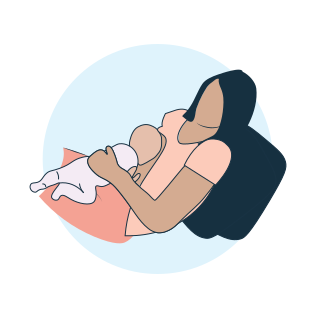
    Laid-Back Hold

    1. Lean back on a pillow with your baby’s tummy touching yours and their head at breast level. Some moms find that sitting up nearly straight works well. Others prefer to lean back and lie almost flat.
    2. You can place your baby’s cheek near your breast, or you may want to use one hand to hold your breast near your baby. It’s up to you and what you think feels best.
    3. Your baby will naturally find your nipple, latch, and begin to suckle.

    This hold is useful when:

    • Your baby is placed on your chest right after birth
    • You have a strong milk let-down
    • You have large breasts
    • You and your baby are comfortable in this position