Skip to Content Skip to Footer
WIC Oregon logo
WIC Oregon logo
  • 主頁
  • 女性
  • 嬰兒
  • 兒童
  • 孩子爸爸
  • Chinese (中國人)
    • English (English)
    • Spanish (Español)
    • Russian (Русский)
    • Ukrainian (українська)
    • Vietnamese (Tiếng Việt)
    • Arabic (العربية)
    • Somali (Soomaali)
    • Dari (از)

非歧視聲明

  • 家
  • Nondiscrimination Statement

非歧視聲明

根據聯邦民權法律以及美國農業部 (USDA) 民權法規和政策的規定,USDA 及其下屬機構、辦事處和員工,以及參與或管理 USDA 計劃的機構,在 USDA 實施或資助的任何計劃或活動中,均不得基於以下任何理由實施歧視:種族、膚色、國籍、宗教、性別、殘疾、年齡、婚姻狀況、家庭/父母身分、源自公共援助計劃所得的收入、政治信仰,或因以往民權活動而遭受報復或打擊報復(並非所有歧視事由均適用於所有計劃)。救濟措施及投訴提交期限因具體計劃或事件而有所不同。

需要透過替代性溝通方式獲取計劃資訊的殘疾人士(例如盲文、大字版、錄音資料、美國手語等),應聯絡負責實施該計劃的州或地方機構,或透過 711(語音和 TTY 專線)電訊轉接服務聯絡 USDA。此外,計劃資訊亦可根據需要提供英文以外的其他語言版本。

如需提出計劃歧視投訴,請填寫《USDA 計劃歧視投訴表》(AD-3027),該表可透過 How to File a Program Discrimination Complaint 網頁線上獲取,亦可在任何 USDA 辦公機構領取;投訴人亦可致函 USDA,並在信中提供表格所要求的全部資訊。如需索取投訴表副本,請致電 (866) 632-9992。請透過以下方式將填妥的表格或書面投訴信函提交至 USDA: (1) 郵寄: U.S. Department of Agriculture, Office of the Assistant Secretary for Civil Rights, 1400 Independence Avenue, SW, Mail Stop 9410, Washington, D.C. 20250-9410; (2) 傳真: (202) 690-7442; (3) 電子郵件: program.intake@usda.gov.

  • 郵寄: U.S. Department of Agriculture,
    Office of the Assistant Secretary for Civil Rights,
    1400 Independence Avenue, SW, Mail Stop 9410,
    Washington, D.C. 20250-9410
  • 傳真: (202) 690-7442
  • 電子郵件: program.intake@usda.gov
USDA 是一個平等機會的提供者、雇主和貸款機構。
WIC Oregon logo

聯絡方式

800 NE Oregon St, Suite 865
Portland, OR 97232
971-673-0040
www.healthoregon.org/wic

瞭解更多

  • 如何申請
  • 尋找診所
  • 我可以在哪裡購物?

資源

  • 俄勒岡州健康計劃
  • WIC 母乳餵養支持
  • 俄勒岡州菸草預防處
  • Oregon 211
  • Food Hero – 食譜
  • facebook
  • Youtube

USDA 是一個平等機會的提供者、雇主和貸款機構。

Cookie Policy隱私權政策

© Brush Art Corporation

  • Email
  • SMS
If you are using multiple emails, separate them with commas.

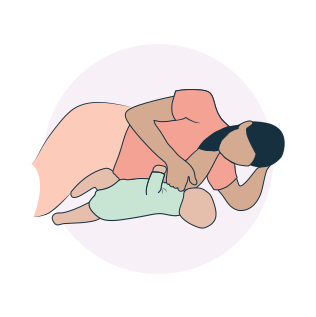
    Side-Lying

    Side-Lying Hold

    1. For the right breast, lie on your right side with your baby facing you.
    2. Pull your baby close. Your baby’s mouth should be level with your nipple.
    3. In this position, you can cradle your baby’s back with your left arm and support yourself with your right arm and/or pillows.
    4. Keep loose clothing and bedding away from your baby.
    5. Reverse for the left breast.

    This hold is useful when:

    • You had a C-section
    • You want to rest while baby feeds
    • You are breastfeeding in the middle of the night
    • You and your baby are comfortable in this position
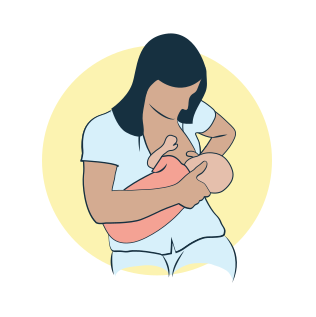
    cross-cradle

    Cross-Cradle Hold

    1. For the right breast, use your left arm to hold your baby’s head at your right breast and baby’s body toward your left side. A pillow across your lap can help support your left arm.
    2. Gently place your left hand behind your baby’s ears and neck, with your thumb and index finger behind each ear and your palm between baby’s shoulder blades. Turn your baby’s body toward yours so your tummies are touching.
    3. Hold your breast as if you are squeezing a sandwich. To protect your back, avoid leaning down to your baby. Instead, bring your baby to you.
    4. As your baby’s mouth opens, push gently with your left palm on baby’s head to help them latch on. Make sure you keep your fingers out of the way.
    5. Reverse for the left breast.

    This hold is useful when:

    • Your baby is premature
    • Your baby has a weak suck
    • Your baby needs help to stay latched
    • Your baby needs extra head support
    • You and your baby are comfortable in this position
    Football

    Clutch or “Football” Hold

    1. For the right breast, hold your baby level, facing up, at your right side.
    2. Put your baby’s head near your right nipple and support their back and legs under your right arm.
    3. Hold the base of your baby’s head with your right palm. A pillow underneath your right arm can help support your baby’s weight.
    4. To protect your back, avoid leaning down to your baby. Bring baby to you instead.
    5. Reverse for the left breast.

    This hold is useful when:

    • You had a C-section
    • You have large breasts
    • You have flat or inverted nipples
    • You have a strong milk let-down
    • You are breastfeeding twins
    • Your baby likes to feed in an upright position
    • Your baby has reflux
    • You and your baby are comfortable in this position
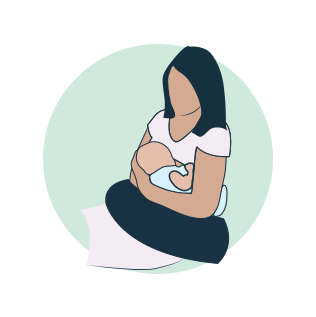
    CRADLE hold

    Cradle Hold

    1. For the right breast, cradle your baby with your right arm. Your baby will be on their left side across your lap, facing you at nipple level.
    2. Your baby’s head will rest on your right forearm with your baby’s back along your inner arm and palm.
    3. Turn your baby’s tummy toward your tummy. Your left hand is free to support your breast, if needed. Pillows can help support your arm and elbow.
    4. To protect your back, avoid leaning down to your baby. Instead, bring your baby to you.
    5. Reverse for the left breast.

    This hold is useful when:

    • Your baby needs help latching on
    • You and your baby are comfortable in this position
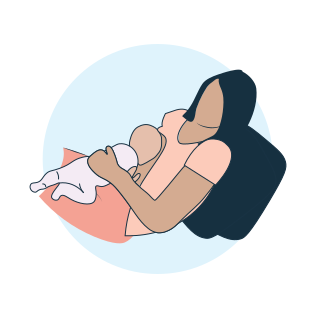
    laid-back

    Laid-Back Hold

    1. Lean back on a pillow with your baby’s tummy touching yours and their head at breast level. Some moms find that sitting up nearly straight works well. Others prefer to lean back and lie almost flat.
    2. You can place your baby’s cheek near your breast, or you may want to use one hand to hold your breast near your baby. It’s up to you and what you think feels best.
    3. Your baby will naturally find your nipple, latch, and begin to suckle.

    This hold is useful when:

    • Your baby is placed on your chest right after birth
    • You have a strong milk let-down
    • You have large breasts
    • You and your baby are comfortable in this position