Skip to Content Skip to Footer
WIC Oregon logo
WIC Oregon logo
  • Trang chủ
  • Phụ nữ
  • Trẻ sơ sinh
  • Trẻ nhỏ
  • Các ông bố
  • Vietnamese (Tiếng Việt)
    • English (English)
    • Spanish (Español)
    • Russian (Русский)
    • Ukrainian (українська)
    • Chinese (中國人)
    • Arabic (العربية)
    • Somali (Soomaali)
    • Dari (از)

Tuyên bố không phân biệt đối xử

  • Trang chủ
  • Nondiscrimination Statement

Tuyên bố không phân biệt đối xử

Theo luật về quyền dân sự Liên bang và các quy định, chính sách về quyền dân sự của Bộ Nông Nghiệp Hoa Kỳ (USDA), USDA, các cơ quan, văn phòng và nhân viên của bộ, cũng như các tổ chức tham gia hoặc quản lý các chương trình của USDA, bị nghiêm cấm phân biệt đối xử dựa trên chủng tộc, màu da, nguồn gốc quốc gia, tôn giáo, giới tính, khuyết tật, tuổi tác, tình trạng hôn nhân, tình trạng gia đình/cha mẹ, thu nhập từ chương trình trợ cấp công, quan điểm chính trị hoặc trả thù/đối phó vì đã tham gia các hoạt động quyền dân sự trước đó, trong bất kỳ chương trình hoặc hoạt động nào do USDA thực hiện hoặc tài trợ (không phải tất cả cơ sở đều áp dụng cho mọi chương trình). Các biện pháp khắc phục và thời hạn nộp đơn khiếu nại khác nhau tùy theo chương trình hoặc sự việc.

Những người khuyết tật cần phương tiện giao tiếp thay thế để nhận thông tin về chương trình (ví dụ: chữ nổi Braille, chữ in cỡ lớn, băng ghi âm, Ngôn Ngữ Ký Hiệu Mỹ, v.v.) nên liên hệ với cơ quan tiểu bang hoặc địa phương quản lý chương trình hoặc liên hệ với USDA qua Dịch Vụ Chuyển Tiếp Viễn Thông theo số 711 (cuộc gọi thoại và TTY). Ngoài ra, thông tin về chương trình có thể được cung cấp bằng các ngôn ngữ khác ngoài tiếng Anh.

Để nộp đơn khiếu nại về việc phân biệt đối xử trong chương trình, vui lòng hoàn tất Đơn Khiếu Nại Phân Biệt Đối Xử Trong Chương Trình của USDA, AD-3027, có thể tìm trực tuyến tại Cách Nộp Đơn Khiếu Nại Phân Biệt Đối Xử Trong Chương Trình hoặc tại bất kỳ văn phòng USDA nào, hoặc viết thư gửi tới USDA, trong đó cung cấp đầy đủ thông tin yêu cầu trong đơn. Để yêu cầu một bản sao của đơn khiếu nại, vui lòng gọi (866) 632-9992. Gửi đơn hoặc thư đã điền đầy đủ thông tin đến USDA qua: (1) thư: U.S. Department of Agriculture, Office of the Assistant Secretary for Civil Rights, 1400 Independence Avenue, SW, Mail Stop 9410, Washington, D.C. 20250-9410; (2) Fax: (202) 690-7442; (3) Email: program.intake@usda.gov.
  • thư: U.S. Department of Agriculture,
    Office of the Assistant Secretary for Civil Rights,
    1400 Independence Avenue, SW, Mail Stop 9410,
    Washington, D.C. 20250-9410
  • Fax: (202) 690-7442
  • Email: program.intake@usda.gov

USDA là nhà cung cấp dịch vụ, tuyển dụng lao động và tổ chức cho vay bình đẳng.
WIC Oregon logo

Liên hệ với chúng tôi

800 NE Oregon St, Suite 865
Portland, OR 97232
971-673-0040
www.healthoregon.org/wic

Tìm hiểu thêm

  • Cách đăng ký
  • Tìm phòng khám
  • Tôi có thể mua hàng ở đâu?

Nguồn trợ giúp

  • Oregon Health Plan (Chương Trình Y Tế Oregon)
  • Bộ Phận Hỗ Trợ Nuôi Con Bằng Sữa Mẹ WIC
  • Ban Phòng Chống Thuốc Lá Oregon
  • Oregon 211
  • Food Hero – Công thức nấu ăn
  • facebook
  • Youtube

USDA là nhà cung cấp dịch vụ, tuyển dụng lao động và tổ chức cho vay bình đẳng.
Cookie PolicyChính Sách Quyền Riêng Tư

© Brush Art Corporation

  • Email
  • SMS
If you are using multiple emails, separate them with commas.

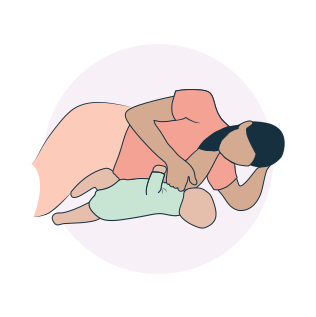
    Side-Lying

    Side-Lying Hold

    1. For the right breast, lie on your right side with your baby facing you.
    2. Pull your baby close. Your baby’s mouth should be level with your nipple.
    3. In this position, you can cradle your baby’s back with your left arm and support yourself with your right arm and/or pillows.
    4. Keep loose clothing and bedding away from your baby.
    5. Reverse for the left breast.

    This hold is useful when:

    • You had a C-section
    • You want to rest while baby feeds
    • You are breastfeeding in the middle of the night
    • You and your baby are comfortable in this position
    cross-cradle

    Cross-Cradle Hold

    1. For the right breast, use your left arm to hold your baby’s head at your right breast and baby’s body toward your left side. A pillow across your lap can help support your left arm.
    2. Gently place your left hand behind your baby’s ears and neck, with your thumb and index finger behind each ear and your palm between baby’s shoulder blades. Turn your baby’s body toward yours so your tummies are touching.
    3. Hold your breast as if you are squeezing a sandwich. To protect your back, avoid leaning down to your baby. Instead, bring your baby to you.
    4. As your baby’s mouth opens, push gently with your left palm on baby’s head to help them latch on. Make sure you keep your fingers out of the way.
    5. Reverse for the left breast.

    This hold is useful when:

    • Your baby is premature
    • Your baby has a weak suck
    • Your baby needs help to stay latched
    • Your baby needs extra head support
    • You and your baby are comfortable in this position
    Football

    Clutch or “Football” Hold

    1. For the right breast, hold your baby level, facing up, at your right side.
    2. Put your baby’s head near your right nipple and support their back and legs under your right arm.
    3. Hold the base of your baby’s head with your right palm. A pillow underneath your right arm can help support your baby’s weight.
    4. To protect your back, avoid leaning down to your baby. Bring baby to you instead.
    5. Reverse for the left breast.

    This hold is useful when:

    • You had a C-section
    • You have large breasts
    • You have flat or inverted nipples
    • You have a strong milk let-down
    • You are breastfeeding twins
    • Your baby likes to feed in an upright position
    • Your baby has reflux
    • You and your baby are comfortable in this position
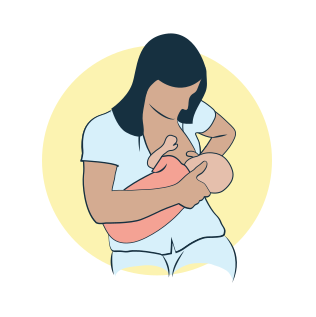
    CRADLE hold

    Cradle Hold

    1. For the right breast, cradle your baby with your right arm. Your baby will be on their left side across your lap, facing you at nipple level.
    2. Your baby’s head will rest on your right forearm with your baby’s back along your inner arm and palm.
    3. Turn your baby’s tummy toward your tummy. Your left hand is free to support your breast, if needed. Pillows can help support your arm and elbow.
    4. To protect your back, avoid leaning down to your baby. Instead, bring your baby to you.
    5. Reverse for the left breast.

    This hold is useful when:

    • Your baby needs help latching on
    • You and your baby are comfortable in this position
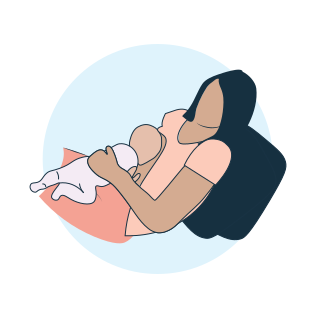
    laid-back

    Laid-Back Hold

    1. Lean back on a pillow with your baby’s tummy touching yours and their head at breast level. Some moms find that sitting up nearly straight works well. Others prefer to lean back and lie almost flat.
    2. You can place your baby’s cheek near your breast, or you may want to use one hand to hold your breast near your baby. It’s up to you and what you think feels best.
    3. Your baby will naturally find your nipple, latch, and begin to suckle.

    This hold is useful when:

    • Your baby is placed on your chest right after birth
    • You have a strong milk let-down
    • You have large breasts
    • You and your baby are comfortable in this position